Living Room Lighting Design: Layered Lighting on a Budget
How to layer ambient, task and accent light in a 12x14 living room. Kelvin, wattage, placement and MAD/$ budget kits.
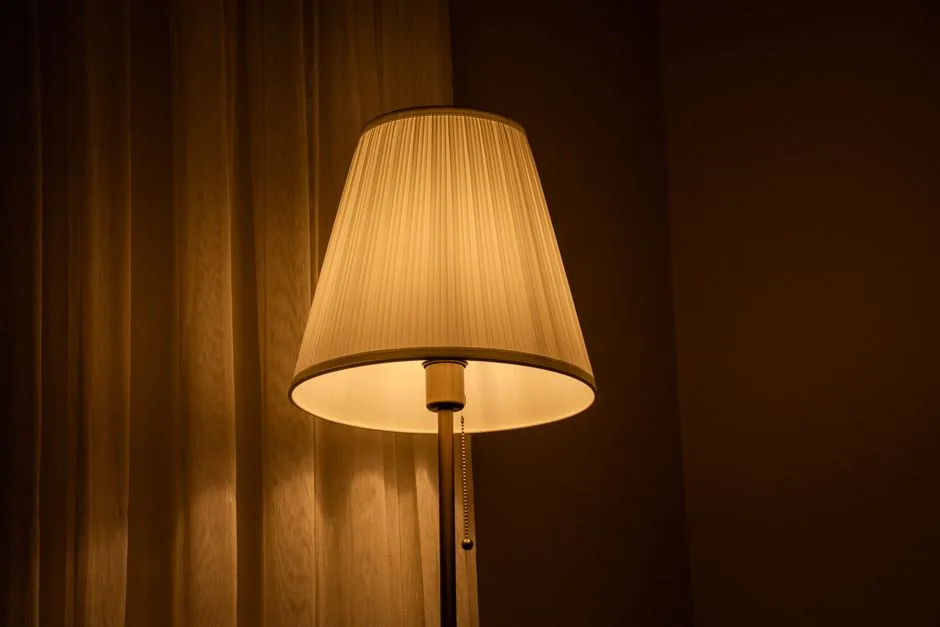
Good lighting makes a MAD 34,000 room look MAD 68,000. Bad lighting (single blue tube) does the opposite.
The 3 layers
- Ambient: general fill. 1 flush LED panel 24W (4000K) per 120 sq ft + cove if false ceiling.
- Task: reading, dining. Floor lamp 8–12W 3000K beside sofa, pendant 8W over dining at 30–32 inch above table.
- Accent: art, texture. 2–3 wall spots 5–7W 3000K grazing a wood panel or art.
Total for 12x14 living: ~35–45W LED = bright but not harsh.
Kelvin guide (simple)
- 2700–3000K warm: bedrooms, cozy corners
- 3500–4000K neutral: living, kitchen work, study
- 5000–6500K daylight: only for task/detail work, not living ambience
Morocco shops often sell 6500K as default — ask for 4000K living, 3000K bedroom. CRI 80+ minimum, 90+ for art/makeup.
Placement that works
- No downlight directly above TV (glare). Put spots 18 inch off wall.
- Dining pendant centered on table, not room.
- Curtain wash: spot 12 inch from wall aimed at curtains makes ceiling feel higher.
- Dimmers: one MAD 70 dimmer on living ambient changes movie vs guest mode.
Budget kits
MAD 1,530–2,400 living kit: 2x 18W panels, 4x 7W spots, 1 floor lamp, 10m strip (kitchen/loft), switches. US $250–450 kit: same + smart bulbs (2700–5000K tunable) + plug dimmer.
Avoid: RGB everywhere, chandelier in 9 ft ceiling, 5 different Kelvins in one room.
Wiring plan before you buy a single bulb
Most living rooms fail because lights are bought before points are marked. On your floor plan, mark sofa, TV, dining, and art first — then place lights. Rule: no ceiling light centered on room if furniture is off-center; center on seating zone instead.
For a 12x14 living-dining, minimum points: 1 ambient panel center-living, 4 perimeter spots (18 inch off wall), 1 dining pendant point, 1 floor-lamp socket near sofa corner, 1 strip driver point for cove or shelf. Adding a point later means cutting gypsum — MAD 170–260 per point vs MAD 25 during work. Put living and dining on separate switches, and cove on its own dimmer.
In Moroccan flats with voltage fluctuation, use branded drivers and surge-protected DB. Cheap strips flicker in 6 months; mid-range with aluminum channel lasts 3–5 years and diffuses glare.
Daylight + curtain coordination
Meknes gets harsh west sun — lighting must work with curtains, not against. Off-white linen + sheer day curtain softens glare so you need fewer daytime lights. If TV faces window, add blackout roller behind curtain or reflections ruin evenings.
For global readers in dark winters: 4000K daytime + 2700K evening tunable bulbs mimic circadian shift. One smart bulb in floor lamp + one in pendant covers 80% of benefit without whole-house system.
Avoid mixing 6500K tube with 3000K lamp in one view — skin looks patchy on video calls. Pick one family (3500–4000K base) and vary only accent warmth.
FAQ
How many watts do I really need? 4–6x 7W if 9 ft ceiling, spaced 3–4 ft, plus ambient panel. More = hotel glare.
Why does my room look dull even when bright? Single overhead source + dark walls + no accent. Add floor lamp + light rug + one lit texture wall.
Bulb shopping list: what to ask in Moroccan shops
Shops push 6500K daylight as brightest — reject for living. Ask: 4000K panel 18–24W CRI 80+ for ambient, 3000K 7W spot CRI 80+ for accent, 3000K filament or opal pendant 8W for dining. Check lumen, not watt: 18W should give 1600–1800lm, 7W 600–700lm. Low-lumen cheap bulbs need double count and still look dull.
Driver matters more than LED chip for strips: ask 12V DC with aluminum channel + diffuser, not bare 220V tape that flickers and shocks. IP20 indoor is fine; kitchen needs IP65 wipeable. Keep 1 spare panel + 2 spots same batch — color temperature shifts between batches, future single replacement mismatches.
Test in shop: phone camera on, wave hand under light — visible flicker lines mean poor driver. No flicker + warm skin tone on hand = buy.
Are smart bulbs worth it in Morocco? One tunable bulb in the floor lamp (2700-4000K, MAD 100) covers 80 percent of benefit. Full-house smart adds cost and app hassle. Start with one, add dining pendant only if you use scenes daily.
Related guides