Here are five ways to invite that quiet, soulful modernity into your own space.
1. Let Walls Breathe, Let Art Speak
A room is not a white box; it is a held pause.
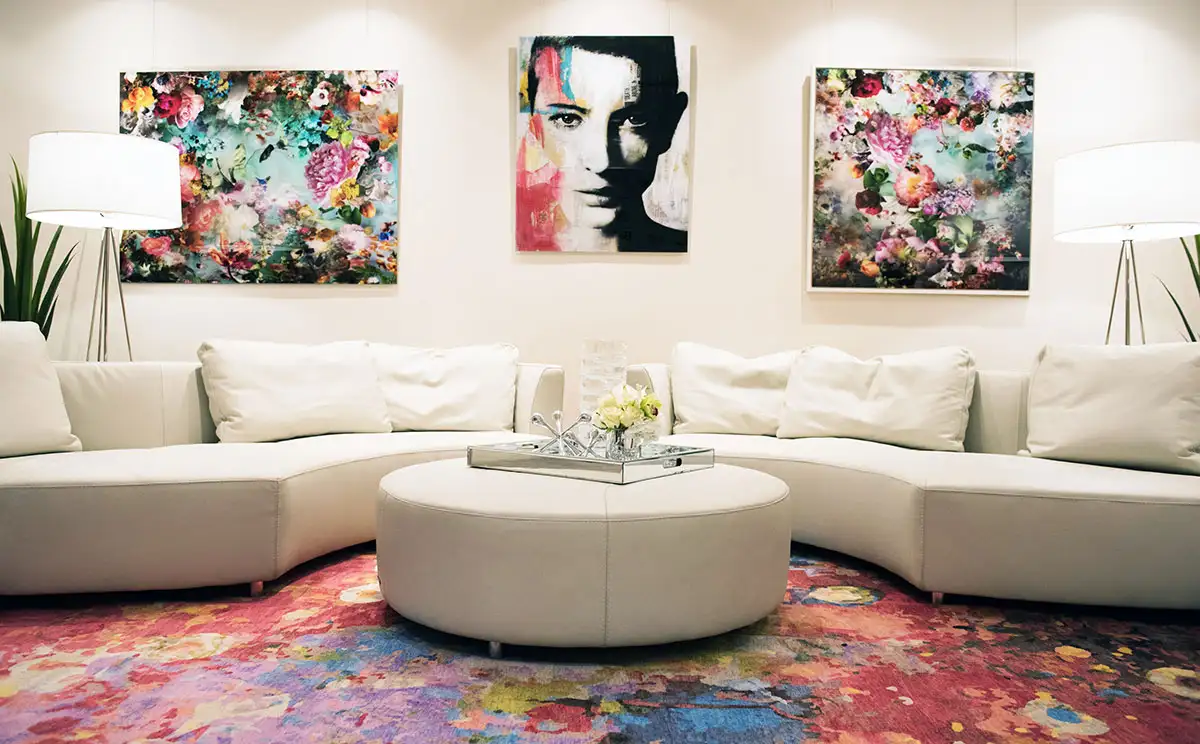
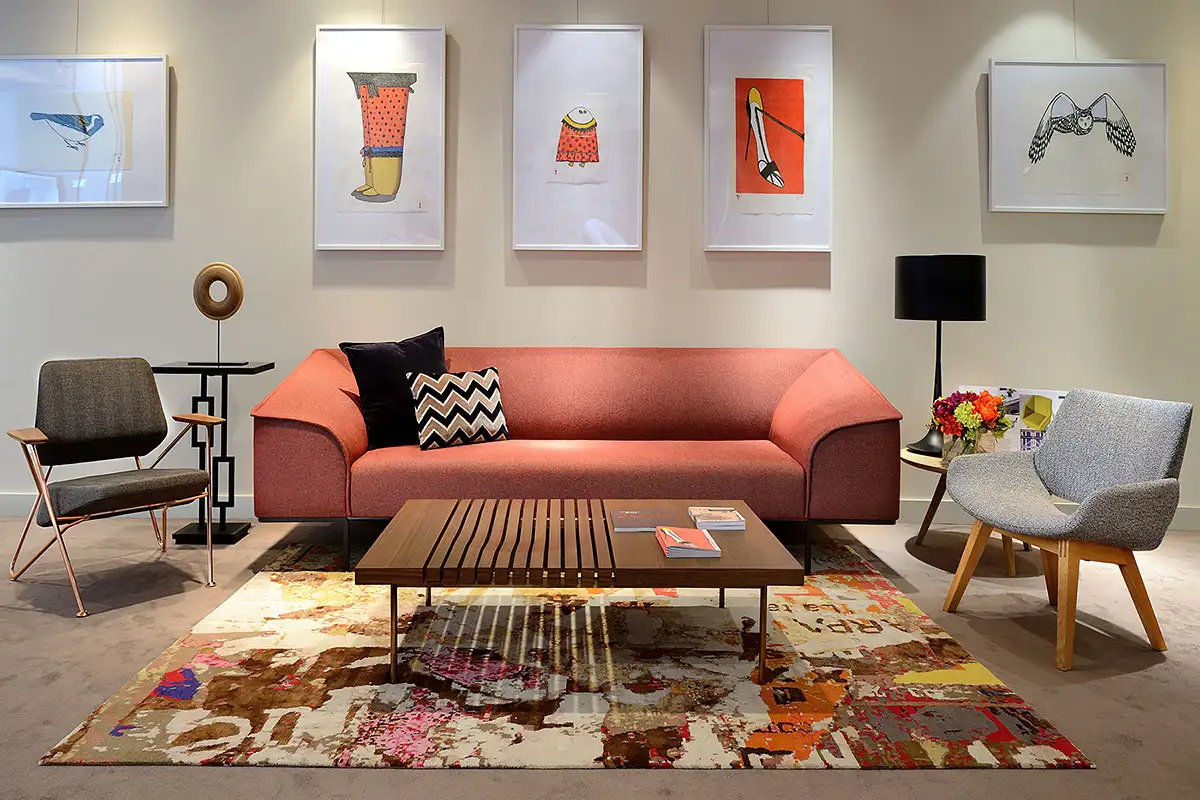
Keeping walls spare is not an act of denial, but of generosity — it gives the floor, the art, and the light the space to be fully seen. Choose a warm, muted palette: lime‑wash with its soft, cloud‑like depth, or clay‑based paints that shift subtly as the sun moves. When the envelope is quiet, the connection between the art and the floor becomes the room’s true voice. A graphic rug beneath a canvas can create the hushed reverence of a gallery, yet still feel like home.
2. Marry Warm Materials with Unapologetic Form
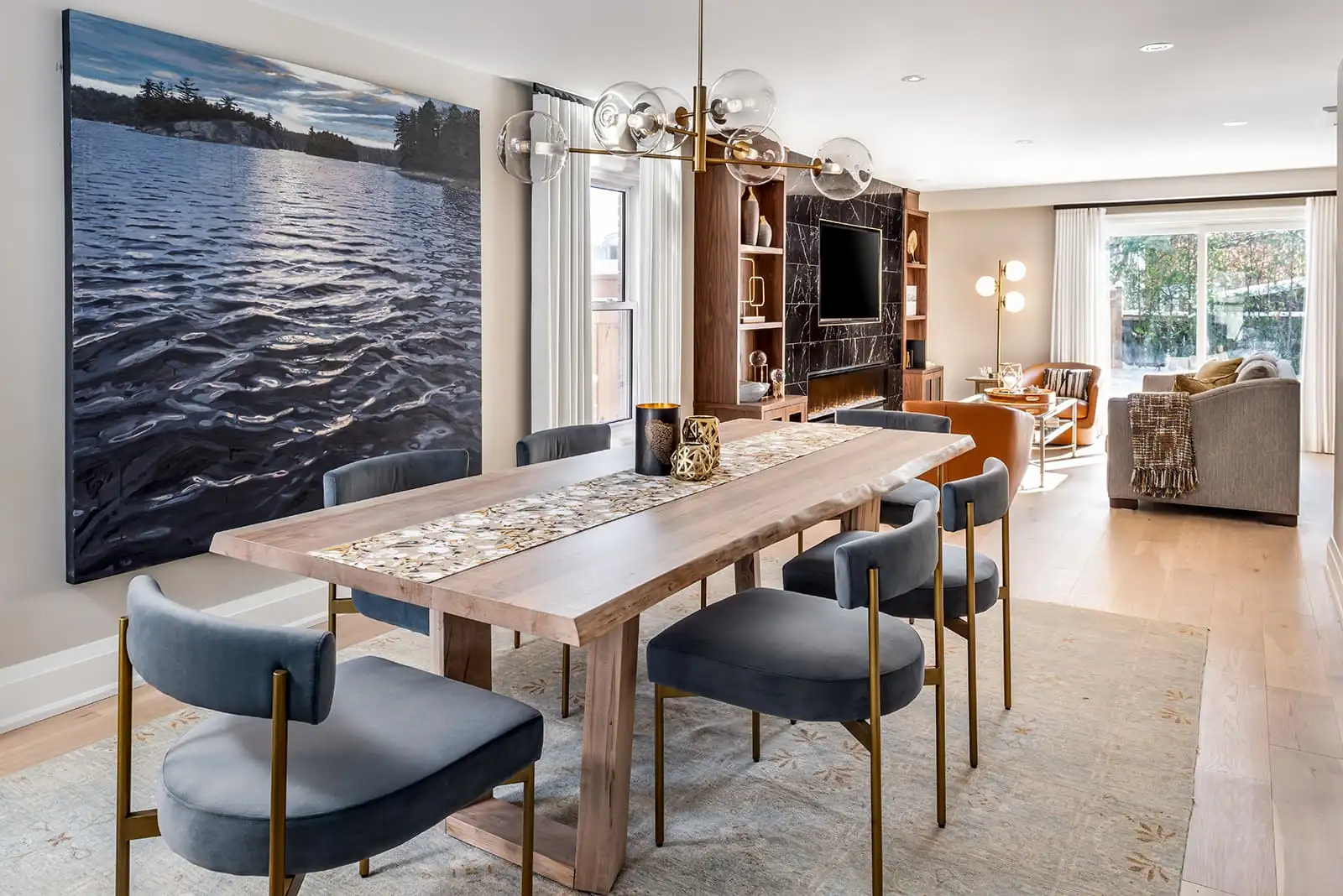
Modernity meets memory at the dining table.
The sharp, confident silhouette of a contemporary chair can be the perfect counterpoint to a massive, irregular timber table that still carries the story of the tree. Here, the new does not erase the old; it frames it. The warmth of the wood — its visible grain, its subtle undulations — acts as an anchor, while the strong forms and colours of the chairs bring a sculptural clarity. This is not a battle between past and present, but a conversation, and it is precisely this tension that makes a room feel both alive and restful.
3. Honour the Vessel, Not the Crowd
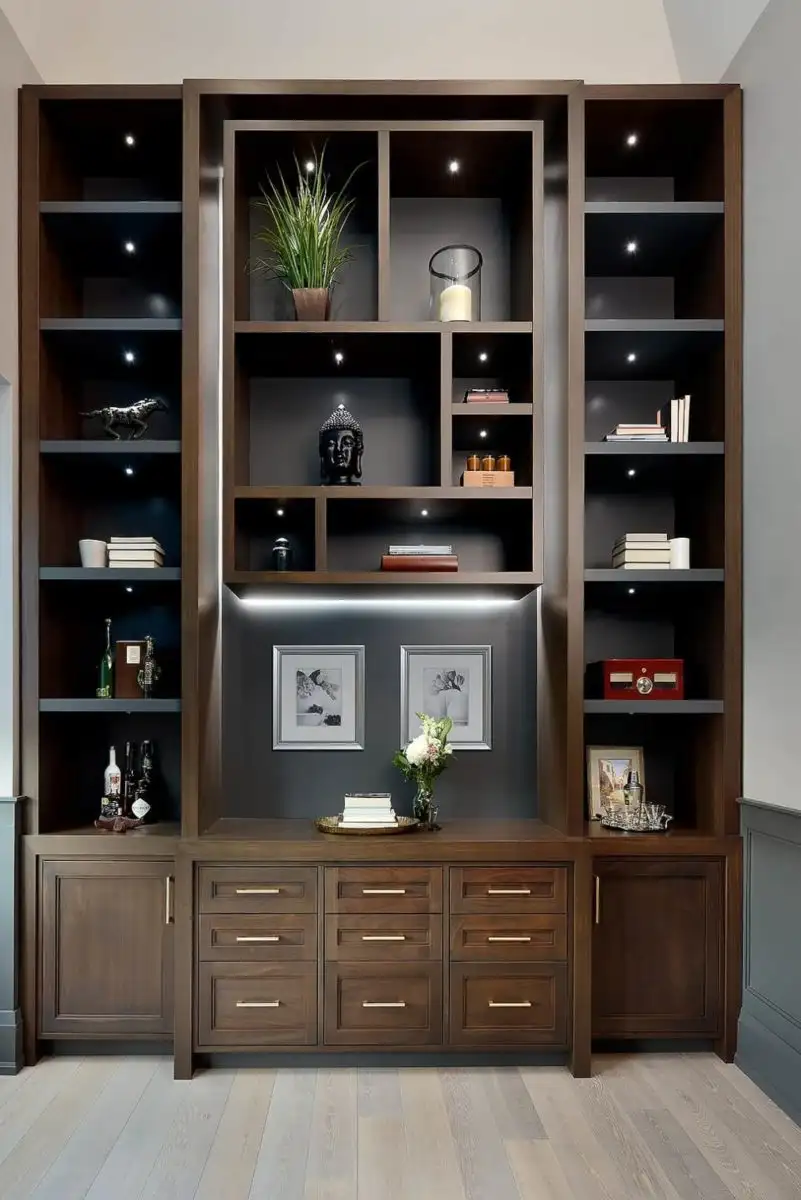
In a built‑in, less is the only silence that speaks.
Floor‑to‑ceiling shelving that stops short of the cornice whispers indecision; built‑ins that truly stretch from floor to ceiling declare architectural intent. Reduce the number of shelves, widen their spacing, and let each object earn its place. A single ceramic vessel, a stack of linen‑bound books, a pool of hidden light — these are enough. Avoid the instinct to accessorise. As in a Japanese tokonoma alcove, the power lies in the space around the object, not in the collection of many. The unit itself becomes the art.
4. Blend Icons of Design with Pieces That Age Softly
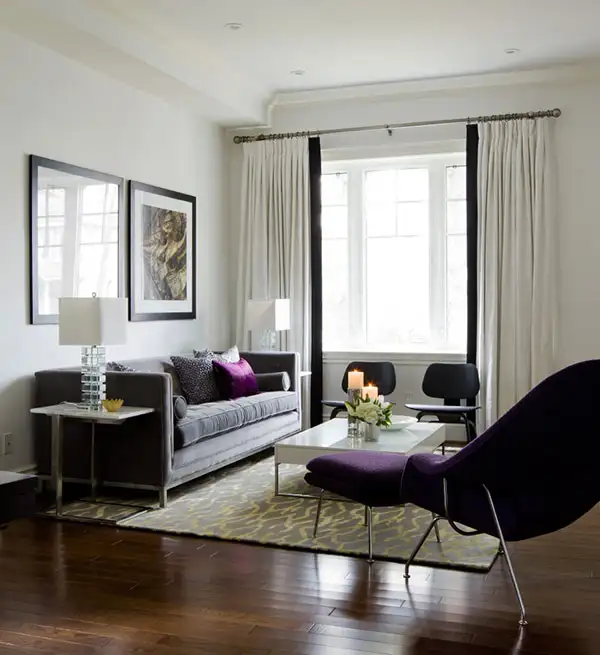
True modernism welcomes the patina of decades.
There is a reason certain 20th‑century forms endure: they capture a human need, not just a stylistic moment. The enveloping curve of a Saarinen Womb Chair, the honest plywood of an Eames shell — these are modern in their essence, but they also know how to grow old gracefully. Place them beside a transitional ottoman in a rich, bruised plum, and the room no longer belongs to a single decade. It becomes a living timeline, where the iconic and the inherited sit down together, and both feel at home.
5. Choose a Key Piece That Redefines the Room
One brave shape can still the visual noise.
Sometimes modernity is not about subtracting everything, but about letting a single, extraordinary form take centre stage. A sofa in a daring colour — an earthy green, a deep indigo — with a silhouette that deliberately plays with proportion, can anchor an entire scheme. The trick is to remove anything that competes with it. Let the eye rest on that one deliberate gesture, and the space tips naturally toward the modern, no matter what else surrounds it.
At its heart, a modern home in this deeper sense is simply one that knows what to keep and what to let go of. And if you love the clarity of this look yet struggle to contain the gentle chaos of daily living, there is a last, profoundly practical piece of wisdom: invest in furniture with drawers and doors. The ability to draw a quiet curtain over life’s necessities — to hide the bills, the charging cables, the unfinished sketchbook — is not a failure of design. It is an act of kindness. The things we use every day can rest unseen, while the room offers back only what feeds the eye and spirit.
If this way of seeing resonates, we think you’ll also find meaning in:
— Beyond Minimalism: The Philosophy of Enough in a World of More (Philosophy)
— The Memory of Walls: How Lime and Clay Carry History (Materials)
— Forgotten Plasters: How Surkhi and Lime Built an Empire of Texture (Heritage)